
Showing posts from category migration.
-
Traffic Jam: Gender, Labor, Migration, and Trafficking in Dubai
›November 16, 2009 // By Calyn Ostrowski“All trafficking is not sex trafficking,” argued Woodrow Wilson Center Fellow Pardis Mahdavi, at a recent Middle East Program event. Drawing on her ethnographic research in the United Arab Emirates, Mahdavi analyzed the policy implications of the latest Trafficking in Persons (TIP) report by the United Nations Office on Drugs and Crime. The TIP report offers information on modern day slavery–human trafficking–and includes comprehensive data on policies and enforcement in 155 countries and territories.
The TIP report paradoxically hurts the people it tries to protect, claimed Mahdavi, by placing too much emphasis on sex trafficking and failing to take into consideration other types of abuse, such as those against men and migrant labor workers. Mahdavi pushed for a “breakthrough of the labeling and politicizing of sex traffickers as women and children,” which depicts women as passive and helpless, while excluding male victims.
According to Mahdavi, in Dubai, 80 percent of the population are migrant laborers. Often, these foreign workers do not trust the government to protect them against trafficking abuses, particularly if they are working in the host country illegally. Thus, civil society organizations, and not the state government, serve as the major source of protection and recourse for abused migrant workers. In the Persian Gulf region, Mahdavi argued that the “TIP report needs to be rewritten…to include increased labor inspectors and police training,” and called for the increased “accountability and transparency” of civil society organizations.
Mahdavi cautioned countries against using the TIP report to enact policies that make migration illegal. Tightening borders forces workers into the informal economy, she maintained, where it becomes difficult to track and protect these individuals.
Although the TIP report has weaknesses, it does pressure countries to act, as Mahdavi has witnessed in the United Arab Emirates, where it has provided opportunities for dialogue on the various aspects of trafficking. -
Climate-Security Gets “To the Point” Today
›Today’s episode of NPR’s “To the Point” with Warren Olney will focus on “Global Warming and the Geo-Political Map,” seeking to answer the question, “What are the risks to natural resources, immigration, and political stability worldwide?”
As one of the four panelists, ECSP Director Geoff Dabelko will draw on his recent article in the Bulletin of Atomic Scientists and ECSP’s climate-security resources.
Climate security has been heating up the media for the last few months, although most news coverage has been rather thin. That’s understandable, given the complexity of the drivers involved, and the crushing constraints on environmental reporters’ time and budgets these days. But climate security is a politically powerful argument, one which advocates from all over the political spectrum have increasingly adopting, and it deserves a more thorough, thoughtful treatment.
“Come to Attention,” a panel at this year’s SEJ annual conference (audio) moderated by ClimateWire’s Lisa Friedman, delved into some of the finer points of this often oversimplified connection. As part of the panel, Dabelko outlined seven cautions to keep in mind and suggestions for improving coverage of the difficult link.
While Grist’s Robert McClure jokingly called the session “doom and gloom without the sense of humor,” Dabelko ended on a positive note, pointing out that by coming together to battle climate change, countries may build bridges to peace, rather than war–particularly if the militaries cooperate in the fight.
In a recent op-ed, Dabelko and the U.S. Army War College’s Kent Butts argue that climate could be one of the most productive avenues for improving military relations with China, suggesting that “U.S. and Chinese militaries should jointly assess the security implications of climate change that concern both sides: rising sea levels, changing precipitation patterns, uncertain migration scenarios, and instability in resource-rich regions.”
“To the Point” airs live online at 3 PM EST. In the Washington, DC, area listen to it at 10 PM EST tonight on WAMU 88.5. -
Teaching Demographic Security: Jennifer Sciubba on Explaining Population’s Conflict Links to Undergrads
›October 7, 2009 // By Wilson Center StaffFor students, looking at national security through the lens of demography can be challenging and frustrating, says Jennifer Dabbs Sciubba, a Mellon Environmental Fellow and professor at Rhodes College. “You really have to start at the beginning and explain the fundamentals of, ‘What is population in the first place?’” she told ECSP Director Geoff Dabelko of her undergraduate courses on population-environment and population-security connections.
However, Sciubba says her students seem equally interested in the courses’ demographic themes, including migration, youth, the demographic dividend, ageing, and urbanization. To her surprise, one of the most popular topics was population age structure.
Military audiences are quicker to understand the connections between population, peace, and conflict, says Sciubba. “You can assume a level of knowledge about demography that the undergraduates have not had,” she explains. -
Climate Change Is Linked to Security, But Don’t Overplay It
›August 31, 2009 // By Wilson Center StaffAs the impacts of climate change on national security are beginning to receive attention at the highest levels of government, climate-security experts must avoid oversimplifying these complex connections, said Geoff Dabelko, director of the Environmental Change and Security Program at the Woodrow Wilson Center.
“Today, with climate change high on the political agenda, powerful actors in the security community are assessing its potentially dangerous effects on conflict and military readiness,” Dabelko said. In “Planning for Climate Change: The Security Community’s Precautionary Principle” in the journal Climatic Change, Dabelko views the defense community’s interest in climate change as an understandable development. “Climate change poses threats and opportunities that any risk analysis calculation should take seriously—including the military’s planning efforts, such as the Quadrennial Defense Review,” he says.
“However, it is important to remember that in the mid-1990s, advocates oversold our understanding of environmental links to security, creating a backlash that ultimately undermined policymakers’ support for meeting the very real connections between environment and conflict head-on. Today, ‘climate security’ is in danger of becoming merely a political argument that understates the complexity of climate’s security challenges.”
In a new op-ed in the Bulletin of the Atomic Scientists, Dabelko offers some advice to scientists, politicians, and the media:- Don’t oversimplify the links between climate change and violent conflict or terrorism.
- Don’t neglect ongoing natural resource and conflict problems.
- Don’t assume we know the precise scale and location of climate-induced migration.
- Don’t forget that climate mitigation efforts can introduce social conflict and needs to be factored into both mitigation and adaptation efforts.
-
Copenhagen’s Chance to Reduce Poverty and Improve Human Security
› The climate community is under increasing pressure to help the developing world, especially those at the “bottom of the pyramid.” The people who did the least to cause climate change will suffer its effects the most.
A critical part of the solution to this problem will be enhancing market-based incentives for climate-friendly behavior. The projects that generate credits for sale in the carbon markets vary widely in scale. However, the most successful have focused on large, localized sites, such as the smoke stack of a single plant. These “centimeter-wide, kilometer-deep” projects are easy to monitor and verify.
In contrast, most projects that benefit the poor are “a kilometer wide, a centimeter deep,” with each family across a large territory producing a small emissions reduction. Monitoring and tracking these community-based projects is usually cost-prohibitive.
DRC: Reducing Emissions and Improving Security
A Mercy Corps project in the refugee camps in the eastern Democratic Republic of the Congo (DRC) seeks to improve the security of women and children while simultaneously reducing carbon emissions.
In the war-ravaged province of North Kivu, the total number of Internally Displaced Persons (IDPs) exceeds 850,000. Demand for resources, particularly fuel wood, vastly exceeds the available supply. To collect wood, women and children have to leave the relative safety of the refugee camps, making them vulnerable to sexual assault and child abduction by rebel groups and the army. Mercy Corps surveys indicate that nine percent of women in camps have been raped or otherwise assaulted.
Mercy Corps installs fuel-efficient stoves that reduce the need for dangerous trips into the forest. A commercial carbon broker develops carbon credits from the reduction in emissions that arises from the use of stoves instead of open fires. The upfront funding from the broker supplements a UNHCR grant supporting the project, and serves to help more than 20,000 families in one of the most dangerous places on Earth.
This extreme example is one of relatively few carbon projects generating revenue that benefits vulnerable people. Yet if this kind of project can be successful in the DRC, larger projects in safer countries may be able to generate massive emissions reductions. The Copenhagen conference needs to set the stage for these types of market incentives for better climate behavior.
Raising a REDD Flag
A relatively new, UN-backed initiative known as Reduced Emissions from Deforestation and Forest Degradation (REDD) seeks to compensate forest-rich countries for protecting or regenerating their forests. However, REDD may have the unintended consequences that further erode the human rights of marginalized people dependent on those forests.
For decades, tropical forests have been logged legally and illegally by states and private companies, without any input from or compensation to indigenous forest communities, who, in many cases, were displaced or worse.
REDD thus raises a troubling question: If countries can generate carbon revenues through REDD, to whom do the revenues belong, and how will they be allocated? Many forestry ministries have a long history of corruption and mismanagement. There are already signs of ministries competing over putative REDD funds. And high-level discussions in only a few countries have included the role of communities and civil society in implementing REDD and distributing revenues.
The Copenhagen conference will be a critical milestone in the global fight to address climate change. Yet it raises significant and far-reaching questions concerning economic development and human rights of the world’s most vulnerable citizens that must not be swept under the rug.
Jim Jarvie is director of climate change, environment, and natural resources at Mercy Corps. In a recent video interview, he spoke to ECSP about how humanitarian groups are responding to new climate challenges.
Photo: Stoves that are more fuel-efficient not only help curb rapid deforestation, but help women spend less time gathering wood in dangerous areas. Courtesy Dee Goluba/Mercy Corps. -
Going Back to Cali–or Chennai: Cities Should Plan For “Climate Migration”
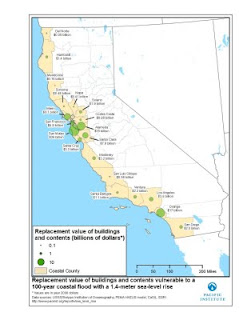
›August 6, 2009 // By Elizabeth HippleOn Monday, California became the first U.S. state to issue a report outlining strategies for adapting to climate change. Among other recommendations, it suggests that Californians should consider moving. -
Climate and Migration: Threat or Opportunity?
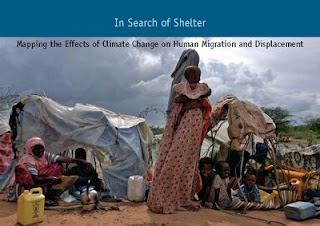
›June 26, 2009 // By Lauren Herzer Risi“The breakdown of ecosystem-dependent livelihoods is likely to remain the premier driver of long-term migration during the next two to three decades,” says In Search of Shelter: Mapping the Effects of Climate Change on Human Migration and Displacement, a report launched at the recent international climate negotiations in Bonn.
According to the report, climate change will threaten livelihoods (and could consequently drive migration) through its impact on agriculture, glacial melt, sea-level rise, and the severity and frequency of natural disasters. While the report recognizes that migration is a complex issue involving a “combination of environmental, economic, social and/or political factors,” it stresses the impact of environmental change on “livelihoods which are dependent on ecosystem services, such as agriculture, herding, and fishing.”
Key to the report’s findings is the disproportionate effect that climate change will continue to have on developing countries, which are ill-equipped to adapt to climate change, and where many people’s livelihoods depend directly on ecosystem services. The report calls for the reduction of carbon emissions to mitigate climate change; the promotion of technologies that will enable adaptation; and the active participation of women and other marginalized groups in adaptation planning.
In a recent invitation-only meeting hosted by the Wilson Center’s Environmental Change and Security Program, Jon Barnett of the University of Melbourne suggested that migration that is partially due to climate might be an opportunity, as “you could use migration to facilitate adaptation.” In Search of Shelter also recognizes this potential opportunity, and suggests that development strategies be formulated accordingly. Better infrastructure, health care, and education in likely receiving cities—many of which are in the developing world and are already overwhelmed by burgeoning slum populations—would significantly reduce the pressure of migration on both migrants and receiving populations.
In Search of Shelter is a unique contribution to the field, examining climate change’s impact on migration in a careful, evidence-based manner. Yet it strikes a common chord with general reports on development by stressing the important role that access to health care, education, and infrastructure play in supporting healthy, secure populations. It may be up for debate how large of a role climate change will play in prompting migration, but it is clear that we need to integrate this issue into broader development, health, and governance strategies.
Image: Cover of In search of shelter: mapping the effects of climate change on human migration and displacement. © 2008 by CARE International. Used by permission. -
Weekly Reading
›A study published in Conservation Letters finds that emphasizing the ways the environment benefits the world’s poor “is a substantial improvement over dollar-based, ecosystem-service valuations that undervalue the requirements of the world’s poor” and “offers great hope for reconciling conservation and human development goals.”
NATO offers seven one-minute videos on environmental-security topics.
In Foreign Policy, Stephen Faris argues that melting Himalayan glaciers could make security problems in South and Central Asia even worse.
The Financial Times offers an extended look at environmental migration in Ghana.
The Arctic Climate Change and Security Policy Conference: Final Report and Findings, a report from the Carnegie Endowment for International Peace, maintains that a multilateral process is the best way to minimize tensions over the Arctic.
 The climate community is under increasing pressure to help the developing world, especially those at the
  On Monday, California became the first U.S. state to issue a