-
What Asia Can Learn from Ukraine’s Quest for Energy Security
December 2, 2025 By Angeli Juani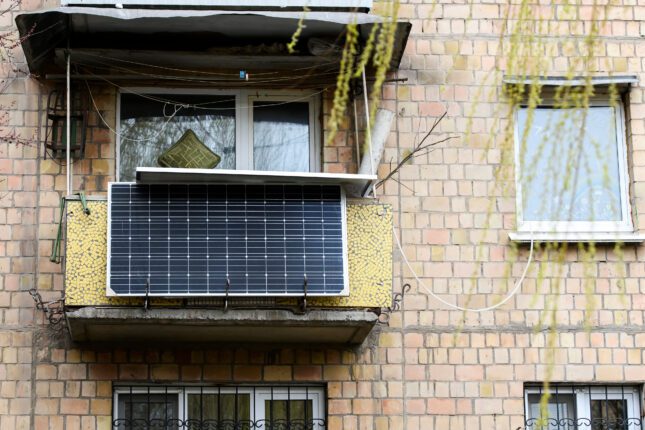
Within a month of escalated Russian airstrikes on its energy systems in October, Ukraine secured U.S. liquified natural gas (LNG) imports via Greece for the coming winter. While this deal demonstrated both the nation’s rapid wartime agility and capacity for energy diversification, it is only one part of a broader transformation of Ukraine’s energy future.
Less notice has been taken of the nation’s revitalization of its energy system at a speed rarely seen in peacetime. Even under the pressures of war, Ukraine is shifting toward more flexible and cleaner power sources—batteries, solar, wind—to strengthen its energy security. These moves are also bolstering its national security, while reinforcing Ukraine’s role as an energy security partner for Europe.
Countries in Asia should take heed of the power lessons offered by Ukraine. Several nations on that continent have energy system vulnerabilities that could become targets for their adversaries.
For instance, 95% of Taiwan’s energy is imported, which means that any disruption (such as a maritime blockade by China) could severely strain its power grid and have an impact on its globally critical semiconductor industry. The Philippines is highly dependent on external actors for both fuel and grid infrastructure as well, with China’s 40% stake in the National Grid Corporation of the Philippines (NGCP) posing a geopolitical risk in any escalation in tensions between them.
Japan’s importation of around 90% of its total energy supply also leaves it highly exposed to external shocks, though the nation has recognized this vulnerability and emphasized import diversification and oil stockpiling. Japan also has cautiously restarted nuclear reactors and steadily expanded its use of renewable energy, but its dependence on seaborne fuels continues to pose strategic and climate risks.
Broader risks also exist in Asia past these individual national vulnerabilities. Hackers could take advantage of the rising tensions and probe critical energy infrastructure and pre-position themselves for potential future damage, as happened when an unidentified hacker group reportedly breached an unnamed Asian country’s power grid in 2023.
Taken together, these challenges suggest that Asian countries would benefit from proactively and systematically strengthening their energy security strategies in a way that mirrors what is happening now in Ukraine.
How Ukraine is Revitalizing Its Energy System Amidst Conflict
Russia has repeatedly targeted Ukraine’s energy infrastructure since 2022, often intensifying its attacks in winter as demand peaks. In October 2025, for instance, Russian attacks disabled 60% of gas production and caused regional power outages. Yet these pressures have not only accelerated Ukraine’s shift toward energy resilience, but they drive investments in clean energy, as well as a deeper integration with Europe and U.S. gas markets. This transformation is happening in three primary ways.
First, Ukraine has worked to expand distributed energy. Because they spread power generation across many locations, solar and wind are harder to disrupt than large centralized thermal plants. Even in wartime, Ukraine had added nearly 1.5 GW of consumer-installed solar capacity by early 2024, and its National Energy and Climate Plan (NECP) for 2025 to 2030 aims to raise renewables’ share of final energy consumption to 27% by 2030 from a previous level of 11% in 2020.
Ukraine’s private sector also is investing in battery storage and grid modernization. The country’s largest battery storage system (200 MW)—built by Ukraine energy firm DTEK and its partner, Fluence—recently came online. Batteries help manage supply and demand fluctuations and keep critical systems powered during outages, thus enabling more wind and solar integration. As the distributor of about 40% of Ukraine’s electricity, DTEK also recently unveiled its 10-year, EUR 7 billion grid modernization plan to attract further investment.
Third, Ukraine has forged foreign partnerships to strengthen its energy security. The United States and Europe have increased their support for energy, including a EUR 500 million European Bank for Reconstruction and Development loan to buy emergency gas after recent attacks. (The EU guarantees on the loan will eventually be reallocated to long-term renewable investments.) Greece has begun facilitating U.S. LNG to Ukraine, while U.S. and European firms are teaming up with Ukrainian developers to rapidly expand distributed generation and storage.
Key Lessons for Asia
Amid growing geopolitical tensions in Asia, Ukraine offers a preview of the challenges posed by potential energy system disruptions. How it has responded also illustrates adaptive moves that could be made to strengthen energy security while meeting decarbonization goals.
Reducing single points of failure in energy systems is one clear lesson. Russia’s targeting of Ukrainian energy infrastructure reveals the vulnerability of centralized power hubs during wartime. By investing in distributed solar, wind, and battery storage systems, Ukraine is reducing its exposure to single point failures. The nation’s deployment of large-scale storage also demonstrates how batteries stabilize grids, support renewables, and provide instant backup during outages—all of which are essential for resilient power systems.
Accelerated market reforms are enabling Ukraine’s full integration with the EU electricity market by 2027, as well as deepening its alignment with the EU gas sector. Streamlined regulatory procedures have cut permit-processing times to between six to ten months, compared to an average of seven to twelve years in the EU.
Private sector investment also helps strengthen critical infrastructure and unlock mutually beneficial investment opportunities, and Ukraine’s experience underscores the importance of capital and technical expertise. Domestic private actors have helped attract international partners and accelerate its grid modernization efforts.
Indeed, another key lesson for Asia is that mobilizing such investment requires strong financial risk-mitigation mechanisms supported by governments and their bilateral or multilateral partners. The recently forged U.S.–Ukraine Economic Partnership Agreement is an early model worth watching, as it may help channel more private investment into Ukraine’s energy infrastructure. (The pact could use a greater focus on energy aside from critical minerals, however). Yet countries must ensure that private-sector partnerships are sufficiently diversified to avoid creating new security risks.
Ukraine’s swift integration of clean energy into its grid also offers a clear demonstration of why clean energy is the future. Aside from meeting decarbonization goals, decentralized renewables, advanced storage, and modernized grids are indispensable to ensuring reliable power under extreme stress. Clean energy is energy security, and energy security is national security.
Boosting Asian Energy Security in a Geopolitically Charged World
Asian countries should not wait for a crisis to put hard-earned lessons from Ukraine into practice. Countries navigating similar geopolitical tensions should begin rolling out the reforms. Recent corruption issues in Ukraine also suggest that countries should ensure transparency in transactions, which is an area where digital technologies might prove useful.
Exposure to energy security risks is highly visible across the Asia-Pacific. given countries’ heavy reliance on external actors for fuel supplies and grid operations. Ukraine demonstrates the vulnerabilities that highly centralized, import-dependent energy systems create in a volatile geopolitical environment.
Yet Asia’s leaders can draw from Ukraine’s playbook to reduce single-point failures, speed up reforms, and crowd in private investment. Clean energy is a strategic hedge in a geopolitically charged world. Asia should act now, before its own energy systems are upended by conflict or natural disaster.
Angeli “Geli” Juani is a Senior Policy and Quantitative Analyst at FP Analytics—the research and advisory division of Foreign Policy. She conducts research on technology policy, international trade and development, global energy, and geopolitical trends. All views expressed in this article are solely her own, and they do not represent those of FP Analytics or Foreign Policy.
Sources: Bloomberg News; Carnegie Endowment for International Peace; Council of Foreign Relations; Energy Community Secretariat; EU; Fluence; Focus Taiwan; FP Analytics; FT; IEA; Reuters; SCMP; Wired
Photo Credits: Licensed by Adobe Stock.
 A Publication of the Stimson Center.